First of all, a little update on our wildlife garden. It's looking really nice this time of year, as the dryness of the summer is abating, being replaced with more frequent rain showers, which means that our pond is rather full, and looking lovely. There are lots of spiderwebs about, and a large common garden spider has made its web spanning from one of our conifers to some figwort. When you find a spider, it's always worth taking a close look at it, because you suddenly see how intricate and beautiful it is. For example, the other day we had a medium-sized house spider scurrying across our carpet. Most people would immediately either jump onto the safety of a chair, scream for somebody to put the spider outside, or simply crush it. I know a certain charming character who took great pleasure in explaining to me, in grim detail, the different ways that his father kills spiders. I, on the other hand, was down on my hands and knees, with my face pressed against the carpet, peering intently at the spider's mouthparts.
The summer seems to have passed so quickly! It's been good, though, and I've done some great things. I've done some rockpooling with the Phoenix group and had some great encounters with some unusual marine life (see here), and done a variety of other wildlife-related activities, like a beach clean and making an insect hotel. I have been to Jersey and learnt about the conservation work that Durrel Wildlife Park is doing, and been greatly inspired by it. I've seen some great wildlife in Jersey, including some new species to me, and explored the beautiful coastline and its wildlife (see here). I've searched for Roesel's bush crickets at Humber Bridge Country Park, unfortunately showing that the likelyhood is that the species is not currently present in the locations that we explored. I learnt more about a variety of creatures, including treehoppers, immortal jellyfish, and the insect with gears in its legs! I also turned 14 this summer, went boating on a river, experienced sleeping in a wood in a hammock, and went camping with my friends several times. Our shed became home to a wasp nest, which is now huge (see here), leading me to learn some more about this fascinating creature. I learnt more about the different species of flora and fauna in our garden, and identified a bird pelvis (see here). I also have a mystery mammal pelvis, which is yet to be identified (see the previous link). I found my first cellar spider in our house (see here), and did some nature hunting on our local patch, too (see here).
Not all of my wildlife-related experiences have been so positive, though - some have been painful! In Jersey, I slipped while rockpooling and ended up with lots of barnacle scratches (it looked rather like I'd been attacked by a bloodthirsty predator!), and in Humber Bridge Country Park, I found how painful a nest of angry European fire ants can be!
Overall, it's been a great summer. I can't wait to see what the rest of the year brings!
Until next time, keep on the wild side!
Wednesday, 21 September 2016

Monday, 19 September 2016
Rockpool Excitement!
Somehow, rockpooling seems to have become quite a regular topic on the BioBlog! It is one of my favourite ways of looking for wildlife, as I love both the sea and the life forms which reside in it. Today, the subject is again rockpooling, this time with the Phoenix Group, which I have talked about several times before, here, here, and here. I did do rockpooling with the group once before, at Robin Hood's Bay, which can be seen in the third link, so this time I was hoping for a similarly great outing. As usual, Phoenix did not disappoint.
We travelled to the Flamborough coast for our rockpooling, and met up with Anthony Herd from the Living Seas Centre. I have met Anthony several times before, and he's a great guy, and very knowledgable on marine life. He regularly goes in search of aquatic creatures on this stretch of coastline, but even he was excited about today, as it was an unusually low tide, revealing the lower shore. Here the water would normally be quite deep, allowing kelp to grow, attracting a variety of life forms which you wouldn't find higher up on the shore. This unusually low tide allowed to explore this particularly biodiverse area which normally we would only be able to reach by diving down to it!
The weather was sunny and warm, and so we got straight to rockpooling, following the tide as it went out, exploring area by area as they were revealed. My first find was hidden under a rock: a group of tiny long-clawed porcelain crabs. I'm not sure why, but there's something that I find very endearing about this diminutive species. Its carapace grows to around 1 centimetre wide, and it has a different method of feeding from other crabs which you can find in British waters. It is a filter-feeder, rather than a scavenger, catching organic particles in the water column, then eating them. There is another species, the broad-clawed porcelain crab, which has a similar lifestyle, but I don't think that I need to explain the different between the 2 species!
After our porcelain crabs (which could be found under most rocks), our finds came thick and fast. I was pleased to find several small edible crabs, as I don't generally find these in Filey, which is where I usually go rockpooling. Next was a shore crab, then some breadcrumb sponge and star ascidians under the same rock, and then, the highlight of my day: what appeared to be a slender seaweed stem. Once Anthony put it in our white bucket, it quickly become clear that this was actually something that I've always wanted to see, a worm pipefish! These slender, eel-like fish are relatives of the seahorse, with tubular snouts with a small mouth at the end, used for sucking up food particles. Like seahorses, the male looks after the eggs, but in the pipefish's case, he doesn't keep the eggs in a pouch. Instead, they are stuck to a patch of soft skin on his underside in rows.

Not long after our find of the worm pipefish, shouts from a nearby group of rockpoolers attracted our attention. 2 girls had found a close relative of our specimen: a snake pipefish. This is an entirely different creature to the worm pipefish, as it is much longer, bears stripes down its side, and it has a dark marking running from its snout to its eye, and then along its head.
Next we found a small-ish common lobster, which began to flop rapidly through the rockpool when I tried to capture it. What I like to think of as 'flopping', is technically known by the less snappy name of the caridoid escape reaction, sometimes called lobstering or tail-flipping. This is the process of lashing out with the tail, forcing the creature backwards through the water. It is a method of movement used by shrimps and lobsters, usually only to escape danger. More information on the caridoid escape reaction can be found here.
Other crustacean species were discovored fairly quickly after that, including squat lobsters, hairy crabs, chameleon prawns, and the velvet swimming crab. The latter was revealed in large numbers as the tide went out. In fact, by the end of the day, I'd seen enough of the species to last me a lifetime! They are quite attractive crabs, with large olive to brown bodies, bluish or even purple claws, and bright red eyes. Their hind legs are flattened and beautifully marked with blue and black stripes, and rimmed with hairs. These are used for swimming, hence the name of the species. However, these crabs may be pretty to look at, but never have I encountered such an aggresive wild animal. Normally a crab may try to pinch you when you pick it up - yet the velvet swimming crab seemed to go out of its way to hurt you. Several times a crab would dart out from under a rock, nip me, then scurry back again. I started looking carefully around the rock for crabs before lifting it up, after several times having angered a crab. Non of this would have been so bad, if it wasn't for the shear number of them: there were literally hundreds of crabs. Non of my fingers ecaped the day unscathed by the pincers, and even my ankles were nipped several times.
Moving on from crustaceans, we also found several fish. Our first find was a 5-bearded rockling, a fish that rather resembles a catfish, and after that there were the pipefish, and a butterfish. We also found a few unidentified gobies in one particularly large rockpool.
I was expecting to find beadlet sea anemones, but I found not one. However, I did discover several dahlia anemones, a fairly large, dumpy species with short tentacles. They have a somewhat warty appearance, and are variable in colour: they can be pink, brown, reddish, or cream. The individuals that I found were a sort of brownish-red, but one had a yellowy sort of body with attractive red streaks on it.
I think out of everything, my favourite find was a rather unexpected one: a bloody Henry starfish. This name actually refers to 2 species, Henricia oculata and H. sanguinolenta, which are difficult to identify, so all that we can say is that the starfish that I found was one of the 2. I was very excited about my find, because this species is my favourite British starfish. It is bright pinkish red, with a maximum diameter of around 20 centimetres. Most other starfish that we could have found are active predators, the bloody Henry, on the other hand, feeds mostly on plankton and organic particles in the water column, occaisonally eating sponges and hydroids. According to this website, the species is only present on the south, west, and north coasts of Britain and Ireland - but we found our specimen in the east!
After a morning rockpooling, we ate our lunch and rested a bit, then carried on to Danes Dike. On the beach there we spent the afternoon doing a beach clean, collecting a large amount of plastic, but also rope, aluminium cans, fishing line, and strips of rubber from the underneath of lobster pots.
Overall, what a great day! We got to see some great marine wildlife, then help our native coastline by participating in a beach clean. Sounds like a day well spent to me.
Until next time, keep on the wild side!
We travelled to the Flamborough coast for our rockpooling, and met up with Anthony Herd from the Living Seas Centre. I have met Anthony several times before, and he's a great guy, and very knowledgable on marine life. He regularly goes in search of aquatic creatures on this stretch of coastline, but even he was excited about today, as it was an unusually low tide, revealing the lower shore. Here the water would normally be quite deep, allowing kelp to grow, attracting a variety of life forms which you wouldn't find higher up on the shore. This unusually low tide allowed to explore this particularly biodiverse area which normally we would only be able to reach by diving down to it!
The weather was sunny and warm, and so we got straight to rockpooling, following the tide as it went out, exploring area by area as they were revealed. My first find was hidden under a rock: a group of tiny long-clawed porcelain crabs. I'm not sure why, but there's something that I find very endearing about this diminutive species. Its carapace grows to around 1 centimetre wide, and it has a different method of feeding from other crabs which you can find in British waters. It is a filter-feeder, rather than a scavenger, catching organic particles in the water column, then eating them. There is another species, the broad-clawed porcelain crab, which has a similar lifestyle, but I don't think that I need to explain the different between the 2 species!
After our porcelain crabs (which could be found under most rocks), our finds came thick and fast. I was pleased to find several small edible crabs, as I don't generally find these in Filey, which is where I usually go rockpooling. Next was a shore crab, then some breadcrumb sponge and star ascidians under the same rock, and then, the highlight of my day: what appeared to be a slender seaweed stem. Once Anthony put it in our white bucket, it quickly become clear that this was actually something that I've always wanted to see, a worm pipefish! These slender, eel-like fish are relatives of the seahorse, with tubular snouts with a small mouth at the end, used for sucking up food particles. Like seahorses, the male looks after the eggs, but in the pipefish's case, he doesn't keep the eggs in a pouch. Instead, they are stuck to a patch of soft skin on his underside in rows.

See if you can spot the 3 worm pipefish in this picture!
By Gabrielle Ringot - Own work, CC BY-SA 4.0, https://commons.wikimedia.org/w/index.php?curid=48466462
Not long after our find of the worm pipefish, shouts from a nearby group of rockpoolers attracted our attention. 2 girls had found a close relative of our specimen: a snake pipefish. This is an entirely different creature to the worm pipefish, as it is much longer, bears stripes down its side, and it has a dark marking running from its snout to its eye, and then along its head.
Next we found a small-ish common lobster, which began to flop rapidly through the rockpool when I tried to capture it. What I like to think of as 'flopping', is technically known by the less snappy name of the caridoid escape reaction, sometimes called lobstering or tail-flipping. This is the process of lashing out with the tail, forcing the creature backwards through the water. It is a method of movement used by shrimps and lobsters, usually only to escape danger. More information on the caridoid escape reaction can be found here.
Other crustacean species were discovored fairly quickly after that, including squat lobsters, hairy crabs, chameleon prawns, and the velvet swimming crab. The latter was revealed in large numbers as the tide went out. In fact, by the end of the day, I'd seen enough of the species to last me a lifetime! They are quite attractive crabs, with large olive to brown bodies, bluish or even purple claws, and bright red eyes. Their hind legs are flattened and beautifully marked with blue and black stripes, and rimmed with hairs. These are used for swimming, hence the name of the species. However, these crabs may be pretty to look at, but never have I encountered such an aggresive wild animal. Normally a crab may try to pinch you when you pick it up - yet the velvet swimming crab seemed to go out of its way to hurt you. Several times a crab would dart out from under a rock, nip me, then scurry back again. I started looking carefully around the rock for crabs before lifting it up, after several times having angered a crab. Non of this would have been so bad, if it wasn't for the shear number of them: there were literally hundreds of crabs. Non of my fingers ecaped the day unscathed by the pincers, and even my ankles were nipped several times.
Moving on from crustaceans, we also found several fish. Our first find was a 5-bearded rockling, a fish that rather resembles a catfish, and after that there were the pipefish, and a butterfish. We also found a few unidentified gobies in one particularly large rockpool.
I was expecting to find beadlet sea anemones, but I found not one. However, I did discover several dahlia anemones, a fairly large, dumpy species with short tentacles. They have a somewhat warty appearance, and are variable in colour: they can be pink, brown, reddish, or cream. The individuals that I found were a sort of brownish-red, but one had a yellowy sort of body with attractive red streaks on it.
I think out of everything, my favourite find was a rather unexpected one: a bloody Henry starfish. This name actually refers to 2 species, Henricia oculata and H. sanguinolenta, which are difficult to identify, so all that we can say is that the starfish that I found was one of the 2. I was very excited about my find, because this species is my favourite British starfish. It is bright pinkish red, with a maximum diameter of around 20 centimetres. Most other starfish that we could have found are active predators, the bloody Henry, on the other hand, feeds mostly on plankton and organic particles in the water column, occaisonally eating sponges and hydroids. According to this website, the species is only present on the south, west, and north coasts of Britain and Ireland - but we found our specimen in the east!
After a morning rockpooling, we ate our lunch and rested a bit, then carried on to Danes Dike. On the beach there we spent the afternoon doing a beach clean, collecting a large amount of plastic, but also rope, aluminium cans, fishing line, and strips of rubber from the underneath of lobster pots.
Overall, what a great day! We got to see some great marine wildlife, then help our native coastline by participating in a beach clean. Sounds like a day well spent to me.
Until next time, keep on the wild side!
Monday, 12 September 2016
My Trip to Jersey
I have not written any blog posts for a few weeks now, because first I was at my friend's house, and then, my mum and I went on holiday - and the latter is the subject of today's post. We went to Jersey for a week, staying in a hostel on the grounds of the Durrel Wildlife Park (an absolutely amazing place), and as well as visiting the wildlife park a few times, we also visited some of Jersey's famously beautiful beaches, and encountered some interesting creatures there.
Each morning we would wake up in our room to the sound of the animals in the park. My favourite was the pair of gibbons singing, a beautiful musical sound which is one of my favourite animal vocalisations. These duets would serve 2 purposes in the wild: first of all, it is a signal that tells other individuals that this is their territory, as gibbons are very territorial. Secondly, singing together at dawn and dusk helps to strengthen the bond between the male and female. The male gibbon at Durrel was previously part of a circus until the park took him in, and during that time he was trained to sing for the crowds. Sadly, even in the more natural habitat of the park he still sometimes reverts to this behaviour: when the zoo gets particularly crowded, he is prone to bouts of singing, because he still remembers when he had to sing for the crowds. Normally he would only sing at dawn and dusk with his mate.
Another noise that we could hear in the morning was made by the ruffed lemurs, which make loud, throaty noises which sound rather as if they come from a large, dangerous predator. Once I was helping out at Yorkshire Wildlife Park and was feeding the ring-tailed lemurs, when a black-and-white ruffed lemur started up this call behind me. It was so loud and shocking from an animal such as a lemur that it made me jump into the air with surprise.
Before we went to Jersey, I had heard that red squirrels were present on the island. I was excited about this, because I've never seen one before, so I did some research and wrote down some likely places where we might get a sighting of a red squirrel. I was expecting travelling to some distant woodland, then sitting silently for a while, and getting a fleeting glimpse of a red blur.
On the contrary, on our first day in Jersey, as we visited the wildlife park, a red squirrel suddenly ran out in front of us, about 2 metres away, stared at us for a little while, then ran off again! After this we had several more sightings in and around the zoo. Sometimes we would even see the squirrels running across the lawn while we ate our breakfast!
On the nighttime, we would often find speckled bush crickets on our windows, or even in our room. Several times I had to catch them and let them out of the house, in case they didn't find the way out themselves, but once we found a dead individual which I had not managed to rescue in the lounge area. In Hull, I have often gone out and searched for hours for the elusive speckled bush crickets - here I could see them without even leaving our room!
We saw a variety of grasshoppers in Jersey, and on our first day we heard the loud song of a field cricket from a nearby road verge. On a night, we could hear the cicada-like chirping of the great green bush crickets, which along with hearing gibbons calling in the morning, gave the impression of being in some far-flung rainforest, admittedly with the temperature turned down a few notches!

The first beach that we visited was Plemont Bay, which is a very beautiful place, with an excellent cafe. It was perfect for us because we needed only to catch 2 buses to get there from our lodge, and the beach was sandy instead of stony, as the latter is difficult and a bit dangerous for my mum to walk on, since she has a bad ankle. However, there were also rockpools, which was exactly what we had came for. I was surprised when we first arrived at Plemont Bay by how many fish there were. I must have seen hundreds of small shannies that day, and I caught a glimpse of a pair of beautifully coloured fish which I think may have been young dragonets. My mum also briefly saw a much larger fish with some blue colouration, which may have been a larger dragonet.
As some of the rockpools were quite large and deep, it was great fun to go swimming in them, as the marine life is even more fascinating underwater.


We didn't see many crabs, as we would at beaches close to Hull, such as Filey and Bridlington, but I did see several shrimps, and hundreds of beadlet anemones. I also found some snakelock anemones, breadcrumb sponge, and a sea lemon. The sea lemon is a lovely little yellow sea slug which is covered in dimples and exudes a strong citrus smell when handled, making it resemble a miniature lemon. It feeds entirely on the breadcrumb sponge, and so its peculiar colouration makes it blend in well against the yellowy colouration of the sponge.
I also discovered that as well as being interesting, marine life can also be painful! Slipping on barnacle-encrusted rocks is not exactly my idea of good fun, and my leg's now covered in painful cuts.

We also visited another beach, called Green Island. When the sea goes out here, it leaves loads of rockpools and large, sheltered areas of sea which are great for swimming in. In one of the larger rockpools at Green Island I found a shoal of fish which I think were sand smelt, which were good fun to swim with. This was also a good spot for collecting shells, and we found many seashells which are yet to be identified, as well as cuttlefish bone (which later had to be thrown away, as it smelt bad and was making our whole room similarly bad-smelling).
We went to Plemont Bay a second time, but because the tide went out quite late and the wind was rather cold that day, we didn't stay as long as our first time. When we weren't rockpooling, we visited the Durrel Wildlife Park, learning about the conservation work it does and having some close-up encounters with the animals they have there. We watched a baby orangutan playing - which was rather amusing, as its idea of fun consisted of hiding itself under some straw, jumping out, then flopping down upon the ground as too exhausted to stand, then repeating the process. We also got very close to the baby's mother, who seemed rather interested in the piece of cake that I had, and another female orangutan, which appeared to be doing the hoovering up, as she walked around the enclosure with her mouth clamped to the floor, sucking up food as she went.
Overall, it was a great trip, and given the opportunity I would most certainly visit Jersey again. We looked only briefly at the wildlife and beautiful coastline of the island, because we wanted to spend several days in Durrel, but in our short amount of time, we encountered a great deal of species which were new and exciting to me.
Until next time, keep on the wild side!
Each morning we would wake up in our room to the sound of the animals in the park. My favourite was the pair of gibbons singing, a beautiful musical sound which is one of my favourite animal vocalisations. These duets would serve 2 purposes in the wild: first of all, it is a signal that tells other individuals that this is their territory, as gibbons are very territorial. Secondly, singing together at dawn and dusk helps to strengthen the bond between the male and female. The male gibbon at Durrel was previously part of a circus until the park took him in, and during that time he was trained to sing for the crowds. Sadly, even in the more natural habitat of the park he still sometimes reverts to this behaviour: when the zoo gets particularly crowded, he is prone to bouts of singing, because he still remembers when he had to sing for the crowds. Normally he would only sing at dawn and dusk with his mate.
Another noise that we could hear in the morning was made by the ruffed lemurs, which make loud, throaty noises which sound rather as if they come from a large, dangerous predator. Once I was helping out at Yorkshire Wildlife Park and was feeding the ring-tailed lemurs, when a black-and-white ruffed lemur started up this call behind me. It was so loud and shocking from an animal such as a lemur that it made me jump into the air with surprise.
Before we went to Jersey, I had heard that red squirrels were present on the island. I was excited about this, because I've never seen one before, so I did some research and wrote down some likely places where we might get a sighting of a red squirrel. I was expecting travelling to some distant woodland, then sitting silently for a while, and getting a fleeting glimpse of a red blur.
On the contrary, on our first day in Jersey, as we visited the wildlife park, a red squirrel suddenly ran out in front of us, about 2 metres away, stared at us for a little while, then ran off again! After this we had several more sightings in and around the zoo. Sometimes we would even see the squirrels running across the lawn while we ate our breakfast!
On the nighttime, we would often find speckled bush crickets on our windows, or even in our room. Several times I had to catch them and let them out of the house, in case they didn't find the way out themselves, but once we found a dead individual which I had not managed to rescue in the lounge area. In Hull, I have often gone out and searched for hours for the elusive speckled bush crickets - here I could see them without even leaving our room!
We saw a variety of grasshoppers in Jersey, and on our first day we heard the loud song of a field cricket from a nearby road verge. On a night, we could hear the cicada-like chirping of the great green bush crickets, which along with hearing gibbons calling in the morning, gave the impression of being in some far-flung rainforest, admittedly with the temperature turned down a few notches!

Plemont Bay
The first beach that we visited was Plemont Bay, which is a very beautiful place, with an excellent cafe. It was perfect for us because we needed only to catch 2 buses to get there from our lodge, and the beach was sandy instead of stony, as the latter is difficult and a bit dangerous for my mum to walk on, since she has a bad ankle. However, there were also rockpools, which was exactly what we had came for. I was surprised when we first arrived at Plemont Bay by how many fish there were. I must have seen hundreds of small shannies that day, and I caught a glimpse of a pair of beautifully coloured fish which I think may have been young dragonets. My mum also briefly saw a much larger fish with some blue colouration, which may have been a larger dragonet.
As some of the rockpools were quite large and deep, it was great fun to go swimming in them, as the marine life is even more fascinating underwater.

Me swimming in a large rockpool. The water was nowhere near as warm as it looks!

A view from the clifftops of Plemont Bay
We didn't see many crabs, as we would at beaches close to Hull, such as Filey and Bridlington, but I did see several shrimps, and hundreds of beadlet anemones. I also found some snakelock anemones, breadcrumb sponge, and a sea lemon. The sea lemon is a lovely little yellow sea slug which is covered in dimples and exudes a strong citrus smell when handled, making it resemble a miniature lemon. It feeds entirely on the breadcrumb sponge, and so its peculiar colouration makes it blend in well against the yellowy colouration of the sponge.
I also discovered that as well as being interesting, marine life can also be painful! Slipping on barnacle-encrusted rocks is not exactly my idea of good fun, and my leg's now covered in painful cuts.

One of the sheltered areas at Green Island. The keen eyed may notice that this is in fact a rare sighting of a Lesser Spotted Jacob, which can be seen in the background searching for marine life
We also visited another beach, called Green Island. When the sea goes out here, it leaves loads of rockpools and large, sheltered areas of sea which are great for swimming in. In one of the larger rockpools at Green Island I found a shoal of fish which I think were sand smelt, which were good fun to swim with. This was also a good spot for collecting shells, and we found many seashells which are yet to be identified, as well as cuttlefish bone (which later had to be thrown away, as it smelt bad and was making our whole room similarly bad-smelling).
We went to Plemont Bay a second time, but because the tide went out quite late and the wind was rather cold that day, we didn't stay as long as our first time. When we weren't rockpooling, we visited the Durrel Wildlife Park, learning about the conservation work it does and having some close-up encounters with the animals they have there. We watched a baby orangutan playing - which was rather amusing, as its idea of fun consisted of hiding itself under some straw, jumping out, then flopping down upon the ground as too exhausted to stand, then repeating the process. We also got very close to the baby's mother, who seemed rather interested in the piece of cake that I had, and another female orangutan, which appeared to be doing the hoovering up, as she walked around the enclosure with her mouth clamped to the floor, sucking up food as she went.
Overall, it was a great trip, and given the opportunity I would most certainly visit Jersey again. We looked only briefly at the wildlife and beautiful coastline of the island, because we wanted to spend several days in Durrel, but in our short amount of time, we encountered a great deal of species which were new and exciting to me.
Until next time, keep on the wild side!
Wednesday, 24 August 2016
Incredible Invertebrates #03: The insect with the strangest headgear in the world?
First of all, a little update on the wasp nest in the shed - it's got bigger. The shed has now become a hive of activity (pun intended), and the nest itself is now several times its previous size. If you go around the back of the shed and put your ear against it, then you can hear the wasps buzzing in their nest! A few nights ago someone tried to break into our shed, and although they were scared off by the alarm, I imagine if they were not deterred by that, they would be in for a painful surprise! As I said to my dad, we should put a sign on our shed saying, DANGER: GUARD WASPS AT WORK. ENTER AT YOUR OWN RISK.
Anyway, now onto our incredible invertebrate . . .
Bocydium globulare is a kind of treehopper, belong to the suborder Auchenorrhyncha, which are true bugs. Groups and families belonging to this suborder include froghoppers, cicadas, and leafhoppers, as well as treehoppers. The latter contains around 3,200 species, and are found on all continents except for Antarctica. They often have an unusual or large pronotum, which can form spines, or sometimes stranger shapes.
Perhaps the weirdest of the family, however, is the Brazilian treehopper. Before I even begin to talk about this thing . . . just look at it.

This is a model of the Brazilian treehopper, but the real insect looks exactly the same. Please note: this image does not belong to me
This strange insect can be found on Tibouchina plants, and is mostly solitary. Other than that, the information on its behaviour and lifecycle seems pretty limited, but there's plenty of information about its strange headgear.
The ball-like structures are not eyes, despite appearances, but hollow chitinous spheres. But what on Earth could they be for, and why is there that long spine emerging from the back of the structure?
My first thought was something to do with mating. Perhaps sexual selection has led these creatures to evolve more and more elaborate ornamentation? Or it could play a role in males fighting for females, rather like stag beetles.
It turns out, other people have had the same idea, but dismissed it, because usually such strange ornamentation is only present in males of the species. However, in the Brazilian treehopper, both males and females bear this strange headgear.
Bearing this is mind, it seems likely that these true bugs use their crest for defensive purposes. Say, for example, that a bird spots one of these animals, and decides to have a snack. Those strange spines and spheres would make it difficult for it to get a hold on its prey, and even if it managed to get past that, can you imagine swallowing something like this? It would be very difficult, and probably painful.
You may notice from the model that the headgear is covered in strange hairs. The exact purpose of these is not known, but they may serve as an irritant, strengthening its defence mechanism. Another idea is that they could be sensory.
The Brazilian treehopper is not the only strange treehopper. Umbonia crassicornis, the thorn bug, mimics a spine to escape predator's attentions.

By Marshal Hedin from San Diego - Umbonia crassicornis (F Membracidae)Uploaded by Jacopo Werther, CC BY 2.0, https://commons.wikimedia.org/w/index.php?curid=24866505
Above: a group of thorn bugs on a branch
There are many other strange treehoppers, but that's to be discussed another time.
Until next time, keep on the wild side!
Tuesday, 9 August 2016
Incredible Invertebrates #02: the jellyfish that can live forever
First of all, a little update on recent activities. Yesterday I joined the Phoenix group at the Humber Bridge Country Park to see if we could find any Roesel's bush crickets, which are rare in this area of Britain. This species had been sighted nearby, and they are known to travel along verges of railways to new localities, so we thought that it would be worth having a little check for the crickets on Country Park. We tried to pick up their stridulations on bat detectors, but unfortunately we found nothing - it does not mean, however, that the crickets aren't there, only that we haven't found them yet.
While we didn't discover any Roesel's bush crickets, I did find some ants. Rather too many ants, in fact, as these happened to be of the species Myrmica rubra, sometimes called the common red ant or European fire ant. The latter name is rather fitting, as this species, while unable to spray acid as many species can, delivers a very painful sting. Having shoes and trousers full of European fire ants was not a pleasant experience! I was quite surprised that the pain of the stings didn't go off for 2 hours, leaving a dull tingling sensation. During this time, it hurt every time I moved my feet. I had no idea that they had such painful stings!
Anyway, onto our incredible invertebrate. This one has always amazed me, because while some animals can live to old ages (trees even more so), one species takes this a step further: it can, theoretically, live forever.
Turritopsis dohrnii is a species of jellyfish. In its adult form, called the medusa, it is quite small: around 4.5 millimetres wide, and about the same tall. They can have up to 90 tentacles, and their large, red stomach can be seen through their transparent flesh. They feed on tiny organisms, and although they are very difficult to keep in captivity, the one person who has managed it, Shin Kubota in Japan, has cultured his on brine shrimps.
By Bachware - Own work, CC BY-SA 4.0, https://commons.wikimedia.org/w/index.php?curid=48971787
These jellyfish do not look very extraordinary, and do not stand out as something special, being rather small and not overly striking. However, it is their life cycle that is outstanding.
Jellyfish normally have fascinating life cycles, and this species is no different.
Females of the species have gonads in the walls of their stomach, of all places, and this is where they keep their eggs. Not much is known about what happens next, but is thought that the eggs are released into the water, where they are fertilized by sperm. Afterwards, the eggs sink to the seabed where they develop into the larval stage, what is known as a planula larva. They develop into colonies of polyps, called hydroids, which will eventually bud off into multiple tiny jellyfishes. Each one of these juveniles are about 1mm in size, but in a few weeks they will have grown and become sexually mature.
Once these jellyfish are adults, they are known as medusae (singular is medusa), and it is these that we know so well. The next stage in their lives will be to breed, and then . . . death? Invertebrates, after all, have famously short lifecycles, at least in some species. Most jellyfish live no more than a few months, and a few live for only a few hours. But T. dohrnii is the complete opposite. The next stage in its life is not death, but something entirely different.
The medusa's tentacles and body will begin to disappear. It will grow polyps, which will settle down on the seabed, and begin to multiply, forming a hydroid colony - and the adult jellyfish will no longer be an adult, but a sexually immature hydroid colony. It has turned its lifecycle on its head, growing back into its hydroid form - which would normally only exist just after the fertilized egg has hatched into a planula, which would begin to form the polyps. Afterwards it will form more small jellyfish.
This jellyfish has, essentially, bypassed death to revert back to a younger form. It is the equivelant of a human, once becoming old, changing back into a toddler, and then carrying on growing all over again, then repeating the process, again and again.
You will probably see what I'm getting at now. This jellyfish cannot die of old age, and is theoretically immortal. The only things that are stopping it from living forever are predators, strandings, and other causes of death. If for a moment we image that we could remove these things from their habitat, an individual of this species could live forever. Just imagine that: one individual jellyfish living for millions of years, until the end of the world. Though of course it wouldn't be just 1 jellyfish, because when it reverts back to its polyp form, it will grow into multiple young jellyfish. So it is not only immortal, but in the process it can create what is essentially lots of little versions of itself.
This is all incredible, but also speculative. Without solid evidence, we cannot be sure if this species could theoretically live forever - I say theoretically, because as already mentioned, there are predators and natural disasters which could kill the individual. Still, it has been given the rather impressive name of the immortal jellyfish.
As previously mentioned, it is very difficult to keep this species in captivity. Only a Japanese man of the Kyoto University has managed to keep the immortal jellyfish for a long period of time. He has kept them for a few years now, and he has recorded that every 2 years, an individual will have managed to revert itself to a younger form around 11 times.
Longevity seems to be a recurring theme in many marine animals. Some black corals are thought to be around 4,265 years old, and a species of clam called the ocean quahog can live for 507 years, possibly longer. The rougheye rockfish can live for up to 205 years old (although this is not the oldest fish. That goes to Hanako, a koi carp who died at 226 years old. However, if reports are to be believed, koi can live for more than 200 years.). Even marine mammals can grow to great ages: the bowhead whale can live for at least 211 years.
However, only a few creatures have the equivalent or lower mortality rates the older they get, and these are known as 'biologically immortal'. Only a few organisms are like this: Sanicula (a plant), skin beetles, the Hydra (an unusual invertebrate), and the immortal jellyfish, to name a few.
What an extraordinary creature!
Until next time, keep on the wild side!
Tuesday, 2 August 2016
Incredible Invertebrates #01: the steampunk insect with gears in its legs
This is the first of my series of blog posts which will be focused on, yes, you guessed it, incredible invertebrates. While rare, magnificent, or cute animals get a lot of attention, the tiny miracles that are happening everyday amongst the little creatures, are just as remarkable. A case in my point: I challenge you to find a species of elephant or rhinoceros with gears in its legs! An impossible, crazy thing for a real animal, right? Well, not exactly . . .
Issus coleoptratus is a species of true bug in the infraorder Fulgoromorpha, more commonly known as planthoppers. These insects can be found across the world, and over 12,500 species have been discovered. In the UK, most planthoppers are rather small, and are most well-known to the public by their nymphs, which produce a frothy substance around them commonly known as 'cuckoo spit'. This foam is common on vegetation during the summer, and often I have been using my sweep net in a meadow, when I find a blob of cuckoo spit on my hand. The froghopper nymph produces this substance to deter predators, as they hide amongst the foam until they are an adults.

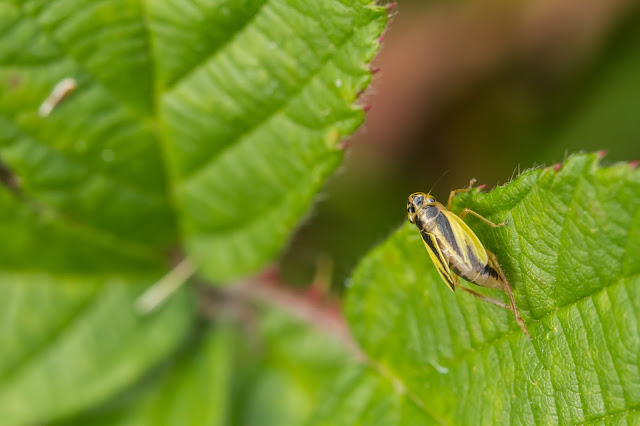
I am sure that most people who are interested in natural history, will have heard of these insects, or the cuckoo spit that they produce. What they may not know, however, is that these creatures have gears in their legs!
Which leads us back to I. coleoptratus. This species is fairly common and does not stand out as particularly special. It grows up to 7 millimetres long, and is usually a dull shade of brown or olive. It feeds on a substance found in trees called phloem, and it cannot fly. The nymphs of this species were being studied by Gregory Sutton of the University of Cambridge, and in particular he was interested in how they jumped. He noticed that when they pushed themselves off, their hind legs moved within 30 microseconds of each other, every single time. Pretty impressive coordination, but essential for an animal that relies on jumping to escape predators. After all, if the legs were out of time when they pushed off, it could send the insect spiralling off on a slant.
Of course, the real question is not why it needs such fine precision, but how it manages it - there wouldn't be time for the nervous system to control such things. This baffling discovery was followed by some experiments on the insects, which came to an incredible conclusion.
On the base of an insect's leg is a segment called the trochanter. In the froghopper, the trochanters of both hind legs have fine ridges (each tooth is around the fraction of the width of a hair!), and as the bases of the hindlegs touch, the ridges interlock - just like gears. As the legs pushed off, the ridges rolled against each other, keeping both limbs in time with the other.
These gears in I. coleoptratus are only present in the nymphs. Once they become adults, they shed their skin, and the ridges on their trochanters with it. So are the adults doomed to go spinning off in an uncontrolled jump every time they try and leap away from danger? Well, actually they're even better at jumping than the nymphs are! Instead, the adults probably use friction to help synchronize their legs, though this is not yet fully understood and definitely not for certain. But why don't the adults keep the neat gear system that works so well for the nymphs? Well, the thing about adult froghoppers is that they never moult, so if part of their cogs broke, they wouldn't be able to grow it back when they shed their skin, as the nymphs would do. If they lost a single tooth on the cog, then the damage would remain there, and it would always spin off to the side when it tried to escape from a predator, making it much more vulnerable than in a controlled jump. This is probably the reason why the adults don't use the same cog-like structures of the nymphs.
The gears found on I. coleoptratus are not unique, however: all planthoppers have them. In fact, people have known about these structures since the 1950s, but nobody knew what they were for. No further research was done on them, until Gregory Sutton, while studying insect movement, unwittingly stumbled upon the answer.
Now if you see some cuckoo spit in your garden, you will be able to admire the wonder of nature that lives within it: the steampunk insect with gears in its legs. The humble froghopper is truly an incredible invertebrate.
Until next time, keep on the wild side!
Issus coleoptratus is a species of true bug in the infraorder Fulgoromorpha, more commonly known as planthoppers. These insects can be found across the world, and over 12,500 species have been discovered. In the UK, most planthoppers are rather small, and are most well-known to the public by their nymphs, which produce a frothy substance around them commonly known as 'cuckoo spit'. This foam is common on vegetation during the summer, and often I have been using my sweep net in a meadow, when I find a blob of cuckoo spit on my hand. The froghopper nymph produces this substance to deter predators, as they hide amongst the foam until they are an adults.

An example of a particularly colourful British froghopper, Cercopis vulnerata.

Another rather colourful species, Evacanthus interruptus
I am sure that most people who are interested in natural history, will have heard of these insects, or the cuckoo spit that they produce. What they may not know, however, is that these creatures have gears in their legs!
Which leads us back to I. coleoptratus. This species is fairly common and does not stand out as particularly special. It grows up to 7 millimetres long, and is usually a dull shade of brown or olive. It feeds on a substance found in trees called phloem, and it cannot fly. The nymphs of this species were being studied by Gregory Sutton of the University of Cambridge, and in particular he was interested in how they jumped. He noticed that when they pushed themselves off, their hind legs moved within 30 microseconds of each other, every single time. Pretty impressive coordination, but essential for an animal that relies on jumping to escape predators. After all, if the legs were out of time when they pushed off, it could send the insect spiralling off on a slant.
Of course, the real question is not why it needs such fine precision, but how it manages it - there wouldn't be time for the nervous system to control such things. This baffling discovery was followed by some experiments on the insects, which came to an incredible conclusion.
On the base of an insect's leg is a segment called the trochanter. In the froghopper, the trochanters of both hind legs have fine ridges (each tooth is around the fraction of the width of a hair!), and as the bases of the hindlegs touch, the ridges interlock - just like gears. As the legs pushed off, the ridges rolled against each other, keeping both limbs in time with the other.
These gears in I. coleoptratus are only present in the nymphs. Once they become adults, they shed their skin, and the ridges on their trochanters with it. So are the adults doomed to go spinning off in an uncontrolled jump every time they try and leap away from danger? Well, actually they're even better at jumping than the nymphs are! Instead, the adults probably use friction to help synchronize their legs, though this is not yet fully understood and definitely not for certain. But why don't the adults keep the neat gear system that works so well for the nymphs? Well, the thing about adult froghoppers is that they never moult, so if part of their cogs broke, they wouldn't be able to grow it back when they shed their skin, as the nymphs would do. If they lost a single tooth on the cog, then the damage would remain there, and it would always spin off to the side when it tried to escape from a predator, making it much more vulnerable than in a controlled jump. This is probably the reason why the adults don't use the same cog-like structures of the nymphs.
The gears found on I. coleoptratus are not unique, however: all planthoppers have them. In fact, people have known about these structures since the 1950s, but nobody knew what they were for. No further research was done on them, until Gregory Sutton, while studying insect movement, unwittingly stumbled upon the answer.
Now if you see some cuckoo spit in your garden, you will be able to admire the wonder of nature that lives within it: the steampunk insect with gears in its legs. The humble froghopper is truly an incredible invertebrate.
Until next time, keep on the wild side!
Monday, 1 August 2016
Wasps: amazing creatures, not a menace!
First of all, a little update on recent happenings. A few weeks ago it was my birthday, and I became 14 years old. It was quite odd, as somehow being 14 seems a lot more like being a teenager than being 13 does! I had a really good day though, and the next week, I met up with my friends, slept in a hammock in the woods, and went boating on a river! My friend, Eden, spotted a pair of grass snakes, and later I spotted a kingfisher darting away upriver.
The mystery bone that I talked about here has not yet been identified. I have asked around on Twitter, and although people have been very helpful, as to yet I have no definite answer. My thanks to those giving me advice though!
Now, onto the subject of this blog post. You may remember that I recently talked about the wasp nest which my dad and I found in our shed (see the post here). Well, the nest is still going strong, and is increasing steadily in size! It has now doubled in size since the first time I talked about it on the 23 June (the date that I write this on is the 1 August). The activity around the nest is also increasing - it is becoming slightly nerve-wracking to enter the shed with the whirlwind of wasps coming out of the nest.

As my parents asked questions about the wasps, I realised that my knowledge of wasps is very low, so I wanted to find out some more information. Here's some questions that I had, and the answers that I have found:
What happens to wasps in the winter?
The whole nest dies! Yes, after all the hard work during the rest of the year to build the nest, the workers all die and the nest will never be used again! The lack of food kills the wasps off, but this is completely normal, and a natural part of the insect's life cycle.
However, not all of the colony dies. The young queens live on, and will hibernate during the winter months. They do not do this is in a nest, instead they will find a sheltered place to hibernate. Many people think that a particularly cold winter is bad for wasps because it will kill the queen. This is a myth: the queen is actually perfectly safe from cold temperatures in her peaceful state of hibernation. In fact, a particularly mild winter is bad for wasps - it means that the queen awakens early, but because there is no nectar for her to eat, she dies.
What happens next to the queen?
As spring arrives, the queen will emerge from hibernation. She has 2 things on her mind: food, and making a new nest. Once she has found a suitable place to make her nest, she will begin building. She uses her mandibles to scrape up wood and chew it into a pulp, before building a new layer of her nest with it. She will lay her eggs in the nest to keep them safe, and once they emerge into grubs, she will undergo a change in behaviour. Until now she has been a nectar-feeder, a valuable pollinator to flowers. This stops once her eggs hatch. She will stop foraging altogether, instead living off the sugars which can be found in insect exoskeletons (more on that later). But what caused the queen to stop foraging? Well, the amount of work she's doing! During the early days of her nest, she is so busy that she simply has no time for feeding herself. This is because, as well as expanding the nest and collecting wood, she must also begin hunting insects. She does not eat them herself, but instead give them to her grubs, who need more protein than what can be found in nectar.
The strangest part is yet to come, however. So far the vision of an attentive mother feeding her babies has been fairly normal. But as the larvae munch away on their insect food, they convert the exoskeletons of their food into sugars, which they then feed to the queen! The mother is not only feeding her offspring, but her offspring are feeding her!
The grubs' chores don't end there, though. When the queen returns to the nest with a mouthful of wood, she will give it to the larvae, which will quickly chew it up for her, mixing it with their saliva to form the pulp used to layer onto the nest. The grubs can do this job much quicker than the queen could.
How does the nest progress after that?
The larvae pupate and become adult workers, and take over nest care duties. This gives the overworked queen a nice rest - well, almost. From now on she has a fairly easy life, simply lying in the nest and laying more eggs to increase the colony.
Are there different categories of workers?
The workers are divided into different duties:
. some wasps look after the queen, feeding her and tending to any other needs that she may have
. other wasps act as guards, protecting the nest from intruders.
. young workers have the cleaning duties, removing waste material from the nest.
. some wasps will collect water droplets, then deposit them on the outside of the nest. This is not for drinking purposes, it is actually to cool the nest.
. another caste of workers will sit outside the nest, with the unusual job of simply fanning the water. This causes it to evaporate, taking heat with it, further aiding the cooling of the nest.
. some workers will collect wood to be used in expanding the nest,
. yet another caste of workers will do the hunting: catching insects to feed to the grubs. Remember how the larvae used to feed the queen? Well, the new workers have exactly the same problem as the queen did, they're just too busy to find nectar to feed on. Instead, as before, the grubs will produce sugars to feed the workers with.
. some workers are on hand to help adult wasps emerge from their cocoons.
How do wasps reproduce?
There comes a time when the queen may chose to make special wasps. She can chose whether to lay a female egg or a male egg - the fertilized eggs form females, the unfertilized ones form males (called drones). Sometimes she will create a special female: a young queen. Exactly how she does this is unknown but it is thought that she may feed the grub a special pheromone. Because all of the queen's workers are infertile females, the drones and queens are special in that they can reproduce.
Once the drones and young queens have become adult wasps, they will emerge from the nest and produce what is known as a mating swarm. After she has mated, a young queen will not go back to the old nest, instead she will go off to a sheltered place to hibernate. And thus we are back where we started.
What happens to the old nest after this?
The queen will stop producing eggs, and she will eventually die. This has an effect on the workers, because without larvae being produced, they cannot get the sugary snack that they previously got from the grubs. Instead, they are forced to forage for themselves, being attracted to anything sugary. They will feed on fruit, nectar, and anything else they can find which is sugary. It is during this time of the year, in the autumn, that these hungry workers can sometimes be found trying to eat our food. Once the weather gets colder, and there is no nectar or fruit to feed on, the workers will die, along with the old queen.
So, there you go. If you dislike wasps, then perhaps after reading this you will at least admire them as a wonder of the natural world, and not just annoying little things which will try and eat your jam sandwhiches and sting you!
Until next time, keep on the wild side!
The mystery bone that I talked about here has not yet been identified. I have asked around on Twitter, and although people have been very helpful, as to yet I have no definite answer. My thanks to those giving me advice though!
Now, onto the subject of this blog post. You may remember that I recently talked about the wasp nest which my dad and I found in our shed (see the post here). Well, the nest is still going strong, and is increasing steadily in size! It has now doubled in size since the first time I talked about it on the 23 June (the date that I write this on is the 1 August). The activity around the nest is also increasing - it is becoming slightly nerve-wracking to enter the shed with the whirlwind of wasps coming out of the nest.

The wasp nest in June. It has now been mended by the wasps, who have also been busy with home expansion: the nest is now approaching the size of a pumpkin!
As my parents asked questions about the wasps, I realised that my knowledge of wasps is very low, so I wanted to find out some more information. Here's some questions that I had, and the answers that I have found:
What happens to wasps in the winter?
The whole nest dies! Yes, after all the hard work during the rest of the year to build the nest, the workers all die and the nest will never be used again! The lack of food kills the wasps off, but this is completely normal, and a natural part of the insect's life cycle.
However, not all of the colony dies. The young queens live on, and will hibernate during the winter months. They do not do this is in a nest, instead they will find a sheltered place to hibernate. Many people think that a particularly cold winter is bad for wasps because it will kill the queen. This is a myth: the queen is actually perfectly safe from cold temperatures in her peaceful state of hibernation. In fact, a particularly mild winter is bad for wasps - it means that the queen awakens early, but because there is no nectar for her to eat, she dies.
What happens next to the queen?
As spring arrives, the queen will emerge from hibernation. She has 2 things on her mind: food, and making a new nest. Once she has found a suitable place to make her nest, she will begin building. She uses her mandibles to scrape up wood and chew it into a pulp, before building a new layer of her nest with it. She will lay her eggs in the nest to keep them safe, and once they emerge into grubs, she will undergo a change in behaviour. Until now she has been a nectar-feeder, a valuable pollinator to flowers. This stops once her eggs hatch. She will stop foraging altogether, instead living off the sugars which can be found in insect exoskeletons (more on that later). But what caused the queen to stop foraging? Well, the amount of work she's doing! During the early days of her nest, she is so busy that she simply has no time for feeding herself. This is because, as well as expanding the nest and collecting wood, she must also begin hunting insects. She does not eat them herself, but instead give them to her grubs, who need more protein than what can be found in nectar.
The strangest part is yet to come, however. So far the vision of an attentive mother feeding her babies has been fairly normal. But as the larvae munch away on their insect food, they convert the exoskeletons of their food into sugars, which they then feed to the queen! The mother is not only feeding her offspring, but her offspring are feeding her!
The grubs' chores don't end there, though. When the queen returns to the nest with a mouthful of wood, she will give it to the larvae, which will quickly chew it up for her, mixing it with their saliva to form the pulp used to layer onto the nest. The grubs can do this job much quicker than the queen could.
How does the nest progress after that?
The larvae pupate and become adult workers, and take over nest care duties. This gives the overworked queen a nice rest - well, almost. From now on she has a fairly easy life, simply lying in the nest and laying more eggs to increase the colony.
Are there different categories of workers?
The workers are divided into different duties:
. some wasps look after the queen, feeding her and tending to any other needs that she may have
. other wasps act as guards, protecting the nest from intruders.
. young workers have the cleaning duties, removing waste material from the nest.
. some wasps will collect water droplets, then deposit them on the outside of the nest. This is not for drinking purposes, it is actually to cool the nest.
. another caste of workers will sit outside the nest, with the unusual job of simply fanning the water. This causes it to evaporate, taking heat with it, further aiding the cooling of the nest.
. some workers will collect wood to be used in expanding the nest,
. yet another caste of workers will do the hunting: catching insects to feed to the grubs. Remember how the larvae used to feed the queen? Well, the new workers have exactly the same problem as the queen did, they're just too busy to find nectar to feed on. Instead, as before, the grubs will produce sugars to feed the workers with.
. some workers are on hand to help adult wasps emerge from their cocoons.
How do wasps reproduce?
There comes a time when the queen may chose to make special wasps. She can chose whether to lay a female egg or a male egg - the fertilized eggs form females, the unfertilized ones form males (called drones). Sometimes she will create a special female: a young queen. Exactly how she does this is unknown but it is thought that she may feed the grub a special pheromone. Because all of the queen's workers are infertile females, the drones and queens are special in that they can reproduce.
Once the drones and young queens have become adult wasps, they will emerge from the nest and produce what is known as a mating swarm. After she has mated, a young queen will not go back to the old nest, instead she will go off to a sheltered place to hibernate. And thus we are back where we started.
What happens to the old nest after this?
The queen will stop producing eggs, and she will eventually die. This has an effect on the workers, because without larvae being produced, they cannot get the sugary snack that they previously got from the grubs. Instead, they are forced to forage for themselves, being attracted to anything sugary. They will feed on fruit, nectar, and anything else they can find which is sugary. It is during this time of the year, in the autumn, that these hungry workers can sometimes be found trying to eat our food. Once the weather gets colder, and there is no nectar or fruit to feed on, the workers will die, along with the old queen.
So, there you go. If you dislike wasps, then perhaps after reading this you will at least admire them as a wonder of the natural world, and not just annoying little things which will try and eat your jam sandwhiches and sting you!
Until next time, keep on the wild side!
Subscribe to:
Posts (Atom)